Copyright © 2026 Crestwood Montessori School. All rights reserved By Digital Guider.

Every Montessori School child learns in a special way. Some children enjoy learning by exploring, while others like following a daily routine. Choosing the right preschool can help your child grow with confidence and happiness.
A Montessori School gives children the freedom to learn through hands-on activities, while a traditional preschool follows a teacher-led schedule. Knowing how both work can help you choose the best place for your little one.
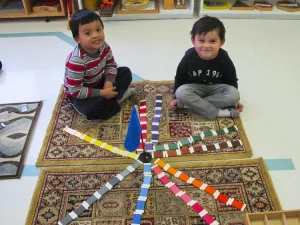
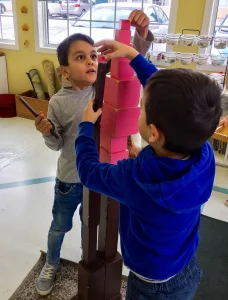
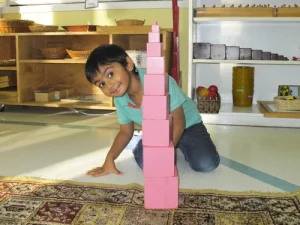
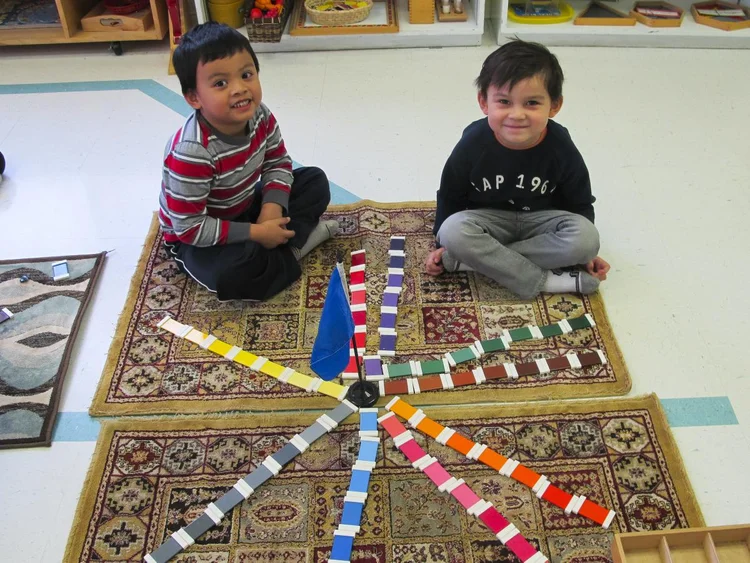
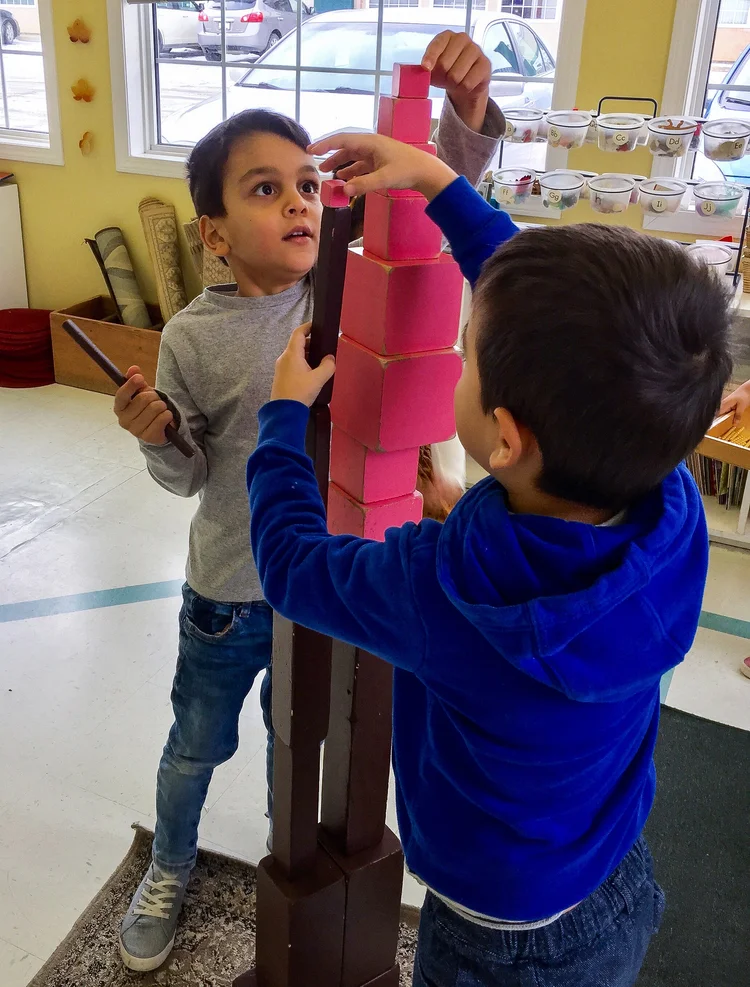
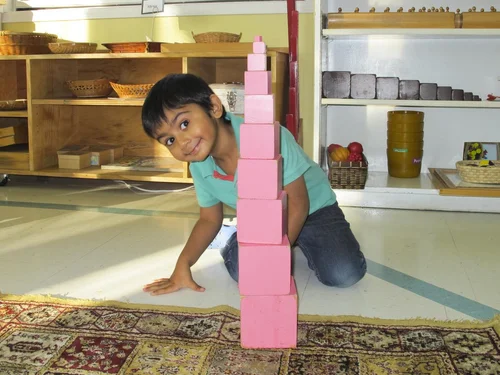
Montessori education helps children learn by doing. Instead of listening to long lessons, children use learning materials, solve simple problems, and discover new ideas on their own. Teachers are there to guide and encourage them whenever they need help.
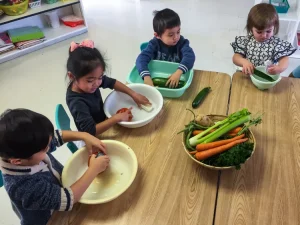
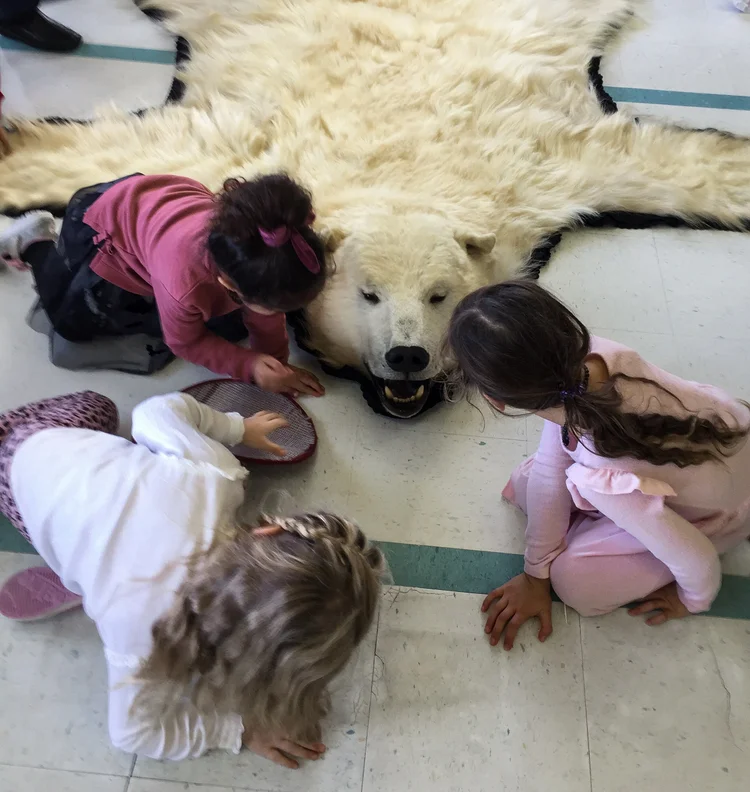
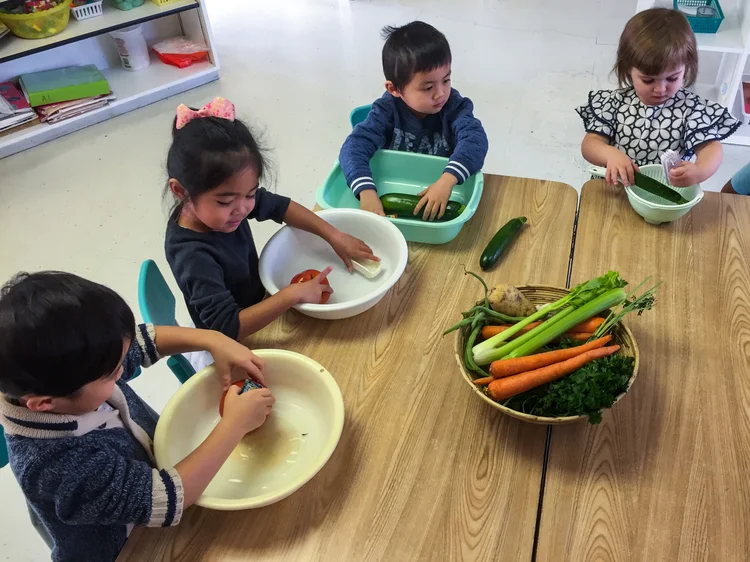
Children also learn everyday life skills like cleaning up, sharing, and caring for their classroom. These activities build confidence and help children become more independent while enjoying the learning process.
Traditional preschools follow a planned daily schedule. Teachers lead the class through activities like singing, storytelling, drawing, games, and group learning. Every child works on similar activities together during the day.
Some common features include:
This type of classroom helps children become familiar with routines and working together with classmates.
Yes. Traditional preschool teaches children basic reading, counting, listening, sharing, and classroom routines. These skills help children feel ready and confident when they begin kindergarten.
Find your Best Pre-School on Facebook : Join us Now
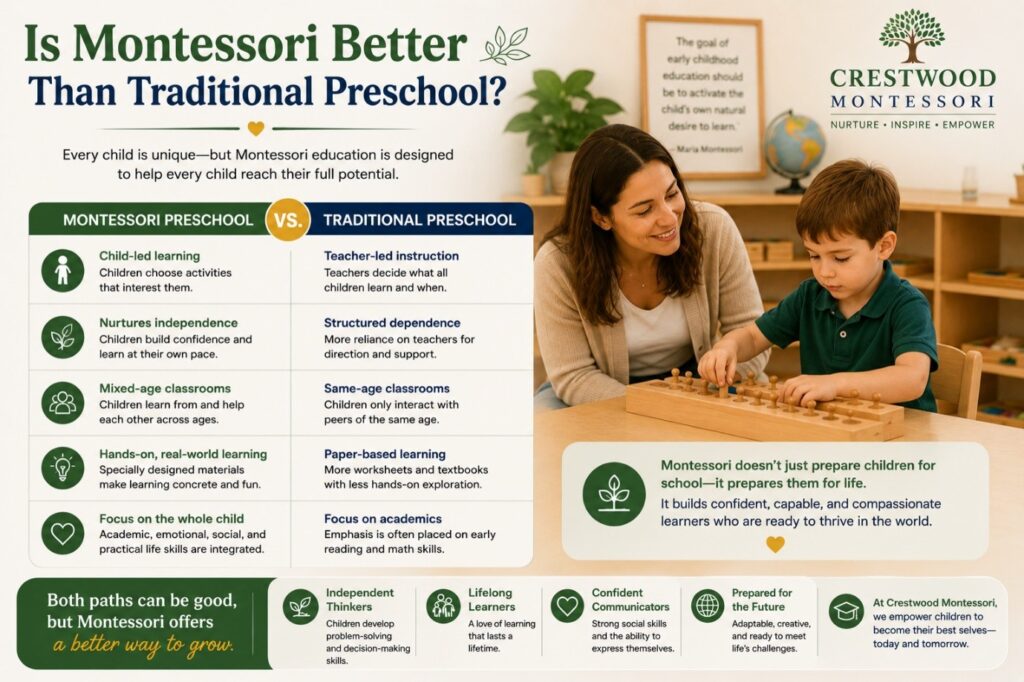
Both types of preschool help children learn and grow, but they do it in different ways. One focuses more on child-led learning, while the other follows teacher-led activities.
| Montessori Preschool | Traditional Preschool |
| Children choose many activities | Teachers choose activities |
| Children learn at their own pace | Most children learn together |
| Mixed-age classrooms | Same-age classrooms |
| Hands-on learning materials | Worksheets and classroom lessons |
| Builds independence | Builds classroom routines |
| Teachers guide children | Teachers lead the class |
There is no single best choice. The right preschool depends on what helps your child learn and grow.
Many parents choose Montessori for preschool because it encourages children to be curious and independent. Children pick learning activities that match their interests while teachers gently guide them throughout the day.
This learning style helps children improve their focus, confidence, and problem-solving skills. They also learn to make simple choices, complete tasks on their own, and enjoy discovering new things every day.
Yes. Montessori classrooms give children enough time to feel comfortable. They learn without pressure, build confidence slowly, and make friends while working together on different activities.
A good Montessori classroom helps children grow in many ways, not just in academics. Children learn important life skills while enjoying hands-on activities and working with learning materials.
These skills include:
These skills help children become ready for school and everyday life while enjoying learning with confidence.
Every child is unique. Some children enjoy learning by exploring on their own, while others like following clear instructions from a teacher. Both learning styles can help children succeed.
Parents should watch how their child learns best. Montessori education may appeal to kids who like to try new things, ask questions, and solve easy issues. Others may be happier in a classroom with a fixed daily routine.
Many parents wonder if Montessori children are ready for elementary school. The answer is yes. Montessori classrooms help children build strong learning habits through hands-on activities, reading, math, and practical life lessons.
Children also learn to stay focused, work independently, and solve problems. These skills make it easier for them to adjust to different classrooms as they grow.
Children in Montessori classrooms learn much more than reading and counting. They also build confidence, responsibility, and social skills that help them every day.
Some important benefits are:
Choosing a preschool is an important decision. Parents should look beyond classroom activities and think about whether the school matches their child’s needs and personality.
Most Searched Query by Parents – Best Age for Montessori Preschool?
Before making a decision, consider:
A preschool should help children feel safe, happy, and excited to learn every day.
Children who enjoy exploring, making choices, and learning through hands-on activities may enjoy Montessori. Visiting the classroom can help parents decide if it is the right fit.
Many Montessori schools welcome children between 2½ and 3 years old. Starting early allows children to enjoy the full preschool learning experience.
Yes. Montessori children develop strong academic, social, and thinking skills that help them move smoothly into traditional elementary schools.
Before Enrolling for the Pre-School visit our Extra Activities we pursue for Overall Child Development : View our Gallery
An essential part of your child’s educational path is selecting the appropriate preschool. At Crestwood Montessori School, we create a caring environment where children grow with confidence, curiosity, and kindness. Our experienced teachers guide every child through meaningful learning experiences that support academic, social, and emotional development.
If you’re looking for a trusted Montessori School, we invite you to explore our programs, visit our campus, and see how we can help your child build a bright future through joyful learning.
 Recent Post
Tag Post
Recent Post
Tag Post